


Knowing The Word in Matthew 1:18-25
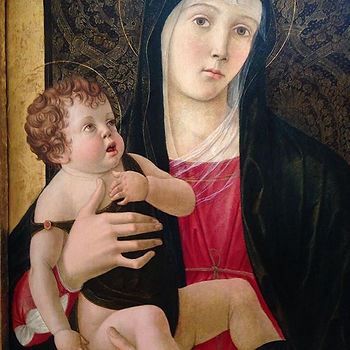
The Birth of Jesus Christ
18 Now the birth of Jesus Christ took place in this way. [Actually, these verses do not explain the birth of Jesus, which we find in Luke’s Gospel, but they explain his virgin conception and his divine name in relation to a prophecy. They also refer to Joseph’s story and not Mary’s.] When his mother Mary had been betrothed to Joseph, before they came together she was found to be with child from the Holy Spirit. [In Jewish law betrothal, which lasted about one year, was much more than contemporary engagement. It was a binding contract, terminable only by death or by a divorce as for a full marriage. The man was already the husband (v. 19), but the woman remained in her father’s house. The marriage was completed when the husband took the betrothed to his home in a public ceremony (v. 24; see also the parable of the ten virgins 25:1-13). They would then have sexual intercourse, consummating the marriage. But in this case Mary was already pregnant by the Holy Spirit, also attested in Luke. In the OT the Spirit of God appears as the agent of God’s activity, especially in creation and the giving of life. (See Genesis 1:2, Ezekiel 37:1-14 and Isaiah 11:2; 42:1; 61:1, and Joel 2:28 for examples of the agency of the Spirit bringing in the Messianic age.)] 19 And her husband Joseph, being a just man and unwilling to put her to shame, resolved to divorce her quietly. [Old Testament law demanded stoning for fornication (Deuteronomy 22:13-21). The integrity of marriage, and any offence against it, are matters of concern to the whole society. The death penalty means the covenant has been broken, meaning that one has sinned against God. This stands against our modern idea of the right of privacy and private sin where sex outside of marriage does not hurt anyone if it is consensual. This idea ignores that all sin is sin against God. Yet Joseph was unwilling to shame her publicly, and determined a private divorce before two witnesses was more appropriate.] 20 But as he considered these things, behold, an angel [messenger] of the Lord appeared to him in a dream, saying, “Joseph, son of David [Joseph must take Mary to his house to confirm the legal lineage of David and name his son Jesus publicly to constitute him as “Son of David”], do not fear to take Mary as your wife, for that which is conceived in her is from the Holy Spirit. 21 She will bear a son, and you shall call his name Jesus, for [see Gen. 16:11 and 17:19] he will save his people from their sins.” [The guidance of Joseph’s movements by direct revelation emphasizes God’s direction over Jesus’ birth and childhood to conform to the scriptural pattern, which is the focus of Matthew’s thought in these initial chapters. (List other examples of revelation of miraculous births from the OT.) Divinely revealed names are always full of meaning. The name Jesus in Hebrew is Jeshua, the sound of which is “he will save” with the etymology being “Yahweh is salvation” or “O save, Yahweh.” “His people” means first and foremost the Jews, but as we get to the Great Commission we find it means more than just Jewish Christians. Salvation from sins is an OT hope (Isa 53; Jer 31:31-34; Ezk 36:24-31) but not the dominate one. Its placement here warns the reader not to conform to the hope of a national liberator and sets the scene for the unfolding of Jesus’ mission in the Gospel.] 22 All this took place to fulfill what the Lord had spoken by the prophet:
23 “Behold, the virgin shall conceive and bear a son, and they shall call his name Immanuel” (which means, God with us). [Isaiah 7:14. The point is not that Jesus ever bore the name Immanuel but that Immanuel describes who Jesus was and his role in bringing God to man. This is related to the name Jesus, in that sin separates us from God. In Jesus that separation ends, so that salvation from sin results in “God with us.”]
24 When Joseph woke from sleep, he did as the angel of the Lord commanded him: he took his wife, 25 but knew her not until she had given birth to a son. [The marriage was formally completed but not consummated. The wording suggests that Joseph and Mary did not have sexual intercourse until after Jesus’ birth, and Jesus’ brothers were born to Joseph and Mary in a natural way. There is no biblical warrant for the perpetual virginity of Mary.] And he called his name Jesus.


Comments